![[Case study]: How Desha made $31k with ProPush Constructor in 1 month](https://propush.me/blog/wp-content/uploads/2026/02/propush-desha-case-study-constructor.jpg)

Anthony has no team – but much experience, data, discipline – and the Constructor. Today, he shared how he grew to a 46.96% ROI over three months.
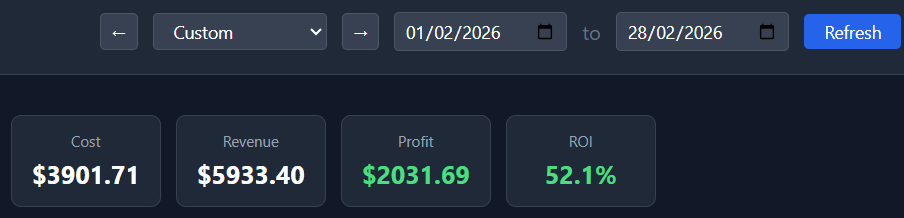
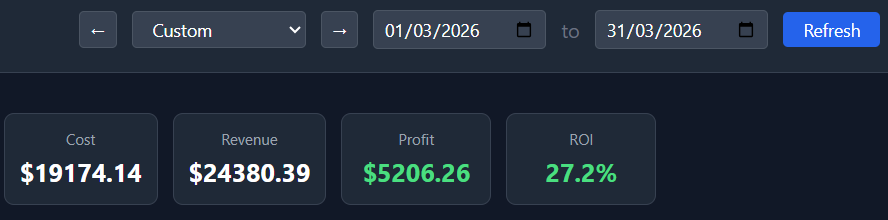
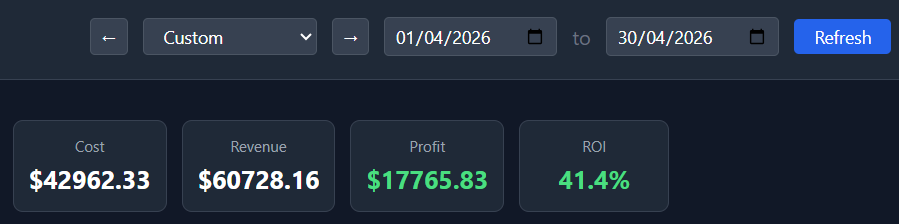
| February | March | April | |
|---|---|---|---|
| Revenue | $8,317.60 | $26,046.08 | $62,687.16 |
| Profit | $4,415.89 | $6,871.94 | $19,724.83 |
| Growth | – | +213% | +141% |
Anthony answered every question without filters. Here's what he said.
I've been an affiliate since I was 14 – back then, it was just pocket money here and there until I realized how much could actually be made. By 19 I was making $30–35K/mo profit and spending it on cars and holidays. That taught me how important reinvesting is. After a Google algo update hit one of my projects, I used whatever money I had left to move deeper into performance marketing. Since then, I've had success across multiple verticals and niches – and now I'm doing well with the Constructor.
↳ 10+ years of real-world experience. Zero jobs outside affiliate marketing.
I'm not revealing the source – it will directly impact my costs by increasing competition. I have competition anyway and always will, but I'm not going to directly impact myself by revealing it.
What I can say: I go broad when gathering data on something new. It gives you a full picture of what works and what doesn't. Everything boils down to profitability. No fluff.
– What made you try the Constructor – and were you skeptical?
My AM reached out and asked if I'd heard of it – I hadn't. Once she explained how it works, I was hooked. I'm not gonna lie, I was a little skeptical at first. I always like seeing what's possible, so I was asking for rough numbers people were making per month – and I was hooked even more with the possibilities. I trust my AM after a long time working together, so my expectations were good.
What I like most is that there's no offer to be capped or paused. Many times with other verticals, I've spent five figures making something work, scaled it, only to be told it's being paused or capped. Then you have to find an alternative with similar performance, which never works out quite the same. With the Constructor, everything is based on YOU. Not third parties pulling offers or hitting caps.
↳ No caps. No pauses. You control the ceiling.
Start small: $20–30/day. Launch well-prepared campaigns and do NOT touch them while gathering data for at least 3 days. Then go in and check segments of traffic with untouched, clean data and optimize accordingly. I like going broad while gathering data on something new – it gives you a full picture. Everything – geos, landers, headlines, buttons – is just variables in one equation.
↳ 3 days of untouched data before any optimization.

Two letters: AI. AI has been a huge advantage for handling optimization at scale and reacting to performance changes faster than I could manually. AI for me is like having a team – but that team is very intelligent across all subjects. A lot needs to be done manually first. Once the working strategy clicks in your mind, let AI replicate that and optimize accordingly.
↳ AI replaced a whole team of optimizers.
You grew from $8K to $62K revenue in 3 months. What was the actual turning point?
Once you become familiar with what a strong campaign looks like, you can begin systemizing and scaling it. Start with one strong geo and focus on making it work before expanding. The data is there. The rest comes down to execution – and everything is on YOU to make it happen. Once the process becomes repeatable, scaling becomes much easier. That's when I moved the daily budget to $2,000/day.
Never give up. I live by this with everything I do. When I see what others can do and prove it works, it fuels my desire to not stop until I reach my goals. You already have proof that the model works. The rest comes down to testing consistently, gathering data, and improving over time. Don't overthink it – just start, and don't touch your campaigns before the data tells you to.
↳ The model is proven. Execution is everything.
Anthony shared his statistics from his tracker – Optimizer.
February 2026 (Optimizer view)
This case study isn’t about a trending vertical, a special traffic source, or a secret trick. It’s about an affiliate who approached a new product the right way: starting small, collecting good data, using AI to optimize campaigns, and staying patient while the model learned.
The model works. What matters most is how well you execute it.